The challenges and responsibility of the steel industry for a carbon-neutral future
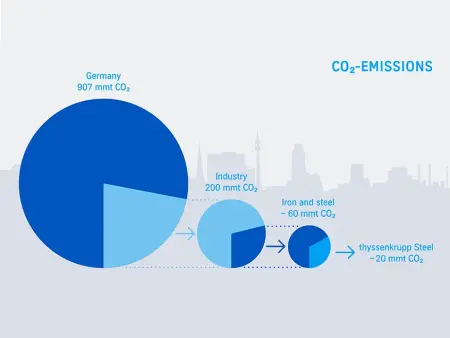
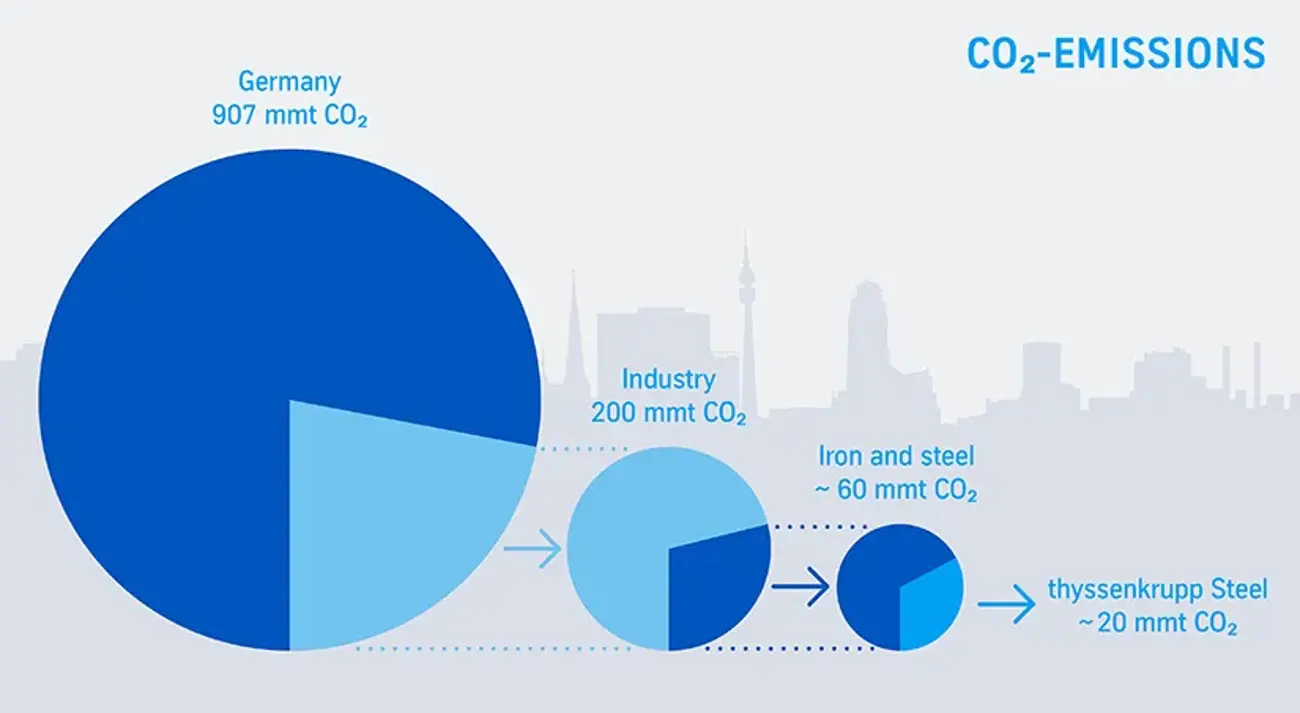
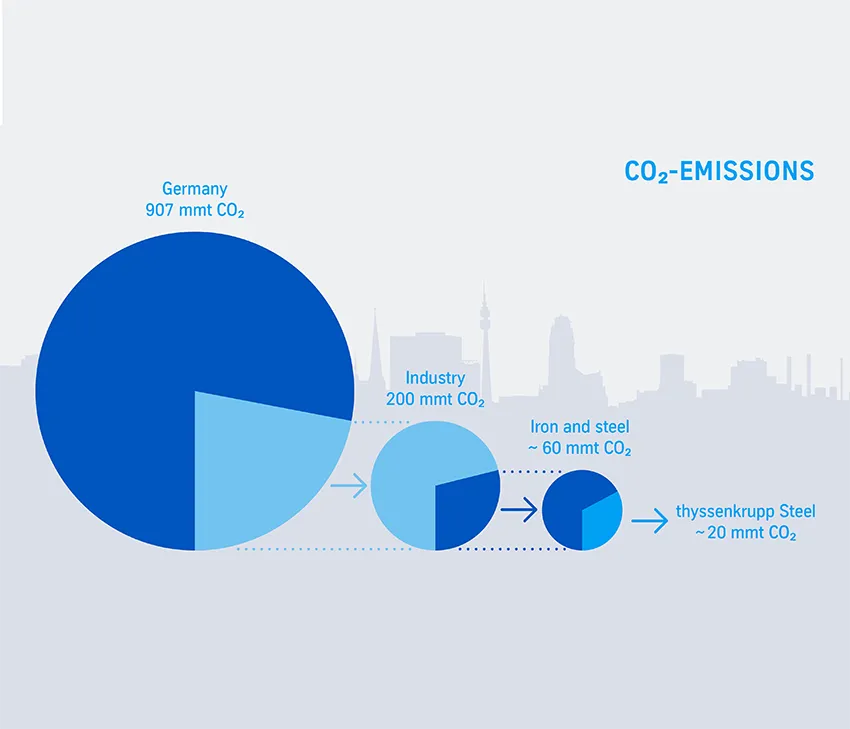
The steel industry bears an enormous responsibility for climate change mitigation. At around 20 million metric tons, thyssenkrupp Steel accounts for 2.5% of Germany's CO2 emissions. This illustrates the immense impact that steelmaking imposes on the environment. Overall, the steel industry accounts for around 7% of Germany's CO2 emissions, and thyssenkrupp Steel contributes about one third of this.
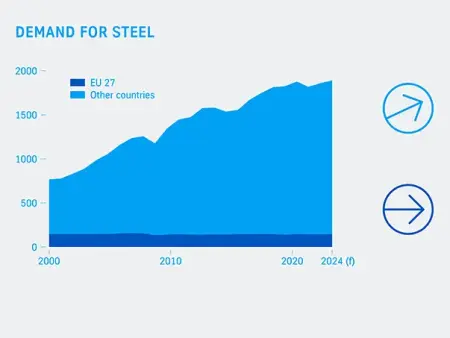
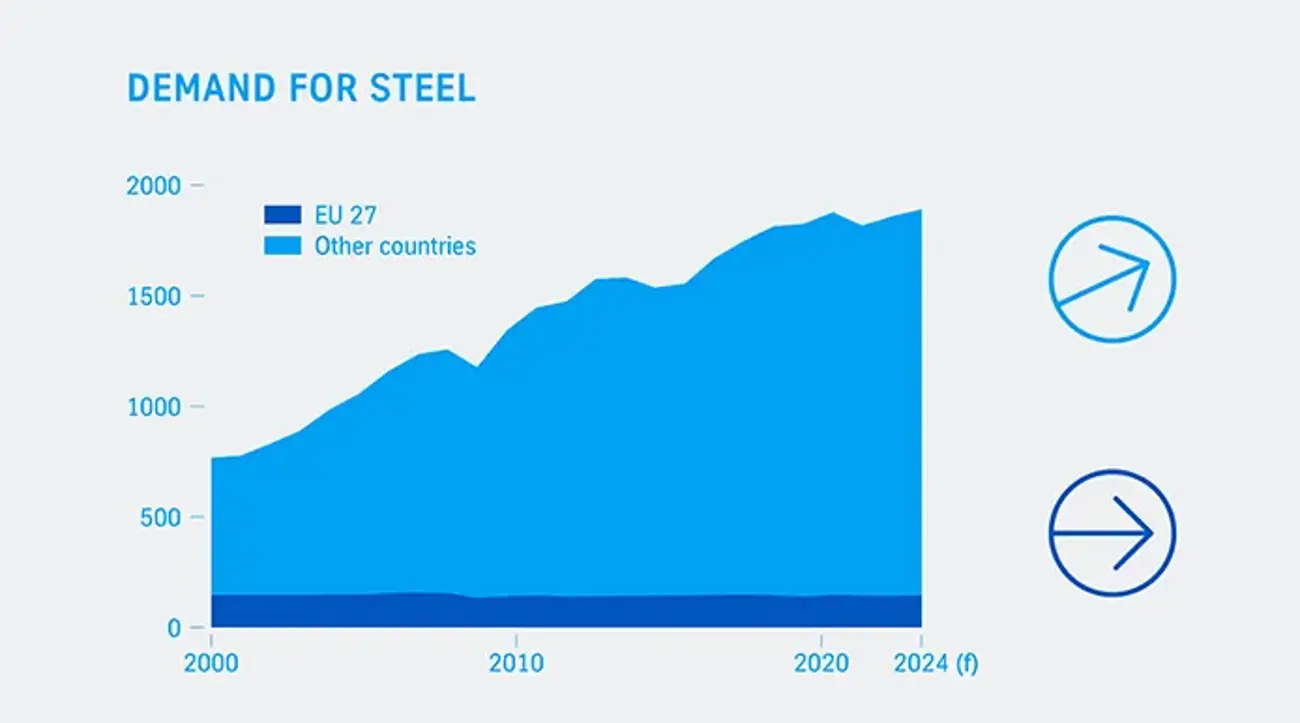
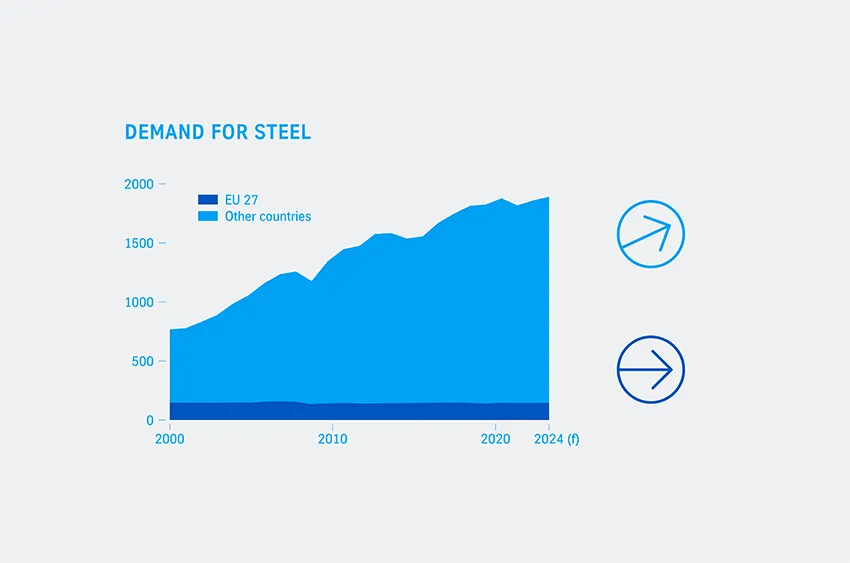
Steel is indispensable in numerous sectors such as the automotive, general engineering, domestic appliance, packaging and construction industries, as well as the energy sector, as a result of which the demand for steel remains high both globally and in Europe. By 2050, global steel consumption is expected to increase by around 20% compared to current levels in order to meet the needs of the world's growing population.1
The increasing global demand for steel, especially in Europe, requires innovative technologies and sustainable approaches to reduce CO2 emissions drastically. According to the IEA sustainable development scenario, total direct emissions from the iron and steel sector are expected to fall by more than 50% by 2050 compared to 2019.2 The development of low-emission processes, the use of renewable energies and of hydrogen are essential tools for minimizing the environmental impact of steel production. By assuming its responsibility, the steel industry can play a central role in the struggle against climate change, and shape a sustainable future. By aiming to complete our transformation to climate-neutral steel production by 2045 at the latest, and by achieving the Net-Zero Target for 2045 validated by the Science Based Targets initiative (SBTi), thyssenkrupp Steel will make a disproportionately significant contribution toward attaining this goal.
By having our climate targets validated by the Science Based Targets initiative (SBTi), we have reached a significant milestone that also confirms the transformation path we have taken. This step underscores our commitment to sustainable development and our leadership role: We are one of the first steel producer to have received confirmation that our targets are in line with the ambitious 1.5-degree goal of the Paris Climate Agreement. The "Near-Term Target" for 2032 according to SBTi and the long-term "Net-Zero Target" for 2045 are now scientifically grounded and confirmed. The SBTi offers an independent, transparent, and acknowledged verification process to ensure that our goals and strategies for reducing greenhouse gas emissions are based on the latest scientific findings.
1 https://worldsteel.org/about-steel/steel-facts/
2 https://worldsteel.org/climate-action/climate-change-and-the-production-of-iron-and-steel/
Figures: CO2 emissions and demand for steel